
Shares of Tata Consultancy Services (TCS), the country's largest IT services provider, continue to remain under pressure, hitting a new eight-month low of Rs 3,624.90 intraday on Tuesday before closing at Rs 3,631, down 1.19 per cent. In the past two trading sessions, the stock price has declined 4 per cent on fears of a slowing US economy.

The average car price in India has increased rapidly in the last 5-6 years due to new emission regulations and demand for more spacious and comfortable cars loaded with advanced technology.


Firodia talked about his plans for the EV-components business, and the components business at large for the group
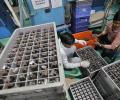
The new four-wheeler (4W) electric vehicle (EV) policy may spur the entry of global majors. The manufacturing policy cuts Customs duty to 15 per cent, given a minimum investment commitment. It calls for a minimum investment of Rs 4,150 crore (about $500 million) for making electric four wheelers (e-4Ws), with manufacturing to commence within three years of approval.

Major two-wheeler (2W) manufacturers in India witnessed a single-digit decline in domestic sales in November after dispatches had picked up in October for the festive season when wholesales went up by 14 per cent and retail also grew by 36 per cent.

From 30 Sensex shares, Bajaj Finserv jumped nearly 8 per cent while Bajaj Finance soared over 6 per cent. Maruti, Titan, Mahindra, Mahindra & Mahindra, Infosys, HCL Tech, Zomato, UltraTech Cement and Kotak Mahindra Bank were the other major gainers. Sun Pharma emerged as the only laggard.

Two-wheeler exports from India have decreased by 20 per cent year-on-year (Y-o-Y) to 1.69 million units in the first half (H1) of 2023-24 (FY24) due to a challenging geopolitical situation and foreign exchange (forex) crises in key markets such as South Asia, industry body Society of Indian Automobile Manufacturers (Siam) said on Monday. On the other hand, passenger vehicle (PV) exports in H1FY24 increased by 5 per cent to 336,754 units because the key markets are much more diversified worldwide, Vinod Aggarwal, president, Siam, told reporters during a press conference. The Russia-Ukraine war, which started in February 2022, has brought significant instability to global fuel prices.

While this will incur a revenue loss amounting to 0.2 per cent of GDP, it will provide a strong boost to consumer sentiment and spending, points out Rajani Sinha.

Maruti Suzuki India on Tuesday said it has commenced export of its sports utility vehicle Fronx to Japan. The first consignment of over 1,600 vehicles left for Japan from Gujarat's Pipavav port, the country's largest carmaker said in a statement. Fronx will be the first SUV from Maruti Suzuki stable to be launched in Japan, it added.

Tamil Nadu -- often dubbed as India's own Detroit due to its thriving automobile manufacturing ecosystem -- is in no mood to miss the EV bus either. Recent developments attest to it. Vietnamese electric vehicle (EV) maker VinFast has promised a $2 billion plant in the southern state. And as promised earlier, the work on Tata Motors-JLR plant will kick off next week, on September 28, after the foundation stone laying ceremony.

Truck movements across the India-Bangladesh border are on the rise, with increasing rentals signalling a trade recovery between the two South Asian nations. Yet, geopolitical tension looms large, with Bangladesh now under an interim government for nearly two months.

Siemens's share price has lost ground in the past few sessions following weak management commentary. The management indicated challenges to the growth outlook due to stagnant private capex and concerns over semiconductor shortages for digital industries. Government infra-spending may regain momentum from January 2025.

Operating margins have been the primary driver of corporate earnings in India in recent quarters, despite revenue growth suffering from weak consumer demand. Companies across sectors have reported a sharp improvement in earnings before interest, tax, depreciation, and amortisation (Ebitda) margins over the past two years, benefiting from lower commodity and energy prices. Higher margins more than compensated for slower revenue growth, resulting in double-digit growth in net profit for five consecutive quarters.

Leading automakers Maruti Suzuki, Hyundai and Tata Motors reported decline in wholesales in August as the companies curtailed vehicle dispatches amid drop in demand and to cut inventories at dealer level. Market leader Maruti Suzuki India said its total domestic passenger vehicle wholesales were at 143,075 units last month as compared to 156,114 units in the year-ago month, registering a dip of 8 per cent. Sales of mini segment cars, comprising Alto and S-Presso, declined to 10,648 units last month as against 12,209 units a year ago.
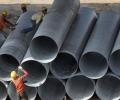
The festive season will mean business for the steel industry as it is the time when automotive and consumer appliance companies bump up demand to prepare for higher sales, experts have said. Ranjan Dhar, chief marketing officer at ArcelorMittal Nippon Steel India (AM/NS India), said that bookings by auto and consumer appliance industries are 20 per cent higher ahead of the festive season compared to last year. "While this could be for a couple of months, it could normalise later at approximately 10 per cent," he said.

Market reaction to the Union Budget was overall neutral. The income tax "gift" wasn't enough to move the needle. There was some apparent rationalisation of Customs duty structure as well as cuts on import duties of some key components for the telecom and IT industry and duty cuts on vehicle imports. Other proposals related to development of agriculture and rural economy and renewables seem to be generally positive.

The Tamil Nadu government on Tuesday cleared the Rs 13,180 crore project by Yuzhan Technology, part of Taiwan's Foxconn Group, at Kancheepuram. The unit is reportedly expected to assemble smartphone display modules, which will be one of the first such units to cater to Apple's growing presence in the country. The unit is expected to generate at least 14,000 jobs. Of the 14 existing manufacturing units in the Apple supply chain, seven are based in Tamil Nadu.

With Donald Trump all set to become US president, Indian exporters may face high customs duties for goods like automobiles, textiles and pharmaceuticals if the new US administration decides to pursue the 'America First' agenda, opined trade experts. Experts also said that Trump could also tighten H-1B visa rules, impacting costs and growth for Indian IT firms. Over 80 per cent of India's IT export earnings come from the US, making it vulnerable to changes in visa policies.

Finance Minister (FM) Nirmala Sitharaman has presented a forward-looking Budget, reinforcing the government's commitment to 'Reform, Perform, and Transform'.

Of the 15 car manufacturing companies in India, eight have a market share of below 2 per cent, raising questions about their long-term future in a competitive market that has already seen Ford Motors and General Motors slam the door on India.

Trump has made it clear to Prime Minister Modi that India will not be spared from Washington's reciprocal tariffs and emphasised that "nobody can argue with me" on tariff structure.

'Invest only in stocks of those companies that deliver on earnings and there is earnings visibility too for the next few quarters.'

If growth reverts to the pre-Covid level, a lot of people may have to temper their rosy optimism, points out Debashis Basu.

'The semiconductor supply is constantly improving, with visible green-shoots in the situation as compared to earlier part of last year'
The automobile sector is considered a good indicator of economic health. It has a very long value chain, from primary materials, like metals, glass and plastic, to value-added high-end electronic components, specialised alloys, and software.
Two-wheeler exports from India fell by 17.8 per cent to 3.65 million units in 2022-23 (FY23), according to data released by the Society of Indian Automobile Manufacturers (Siam) on Thursday. This decline is due to a rise in global inflation and the weakening of economies and currencies in key export markets of Africa, Latin America (LatAm), and South Asia. In contrast to FY23, two-wheeler exports from India jumped 35.4 per cent to 4.44 million units in 2021-22 (FY22).

From setting up cutting-edge facilities to cater to the domestic market and building capabilities of global standards, the action is building up.

Auto industry volumes have grown by 2.5 per cent overall, led by domestic sales of three-wheelers, two-wheelers and passenger vehicles (PVs) in the first quarter of this financial year. Analysts predict an 18 per cent growth in revenues for automotive original equipment manufacturers (OEMs) and profit growth of 69 per cent year-on-year (YoY). However, on a sequential basis, a decline in revenues as well as earnings before interest, taxes, depreciation, and amortisation (Ebitda) margins is expected.

Tata Motors is actively considering tapping into some of the export markets beyond South Asia, for its range of electric vehicles (EVs) as it sees an opportunity of selling affordable EVs in markets outside India. The export plans will coincide with the commercial launch of the Curvve - an electric SUV concept that broke cover on Wednesday, in two years from now, Shailesh Chandra, MD, Tata Motors PVs and Electric Mobility, told Business Standard. "We are actively thinking of the international markets and we would like to go with a portfolio of products. "We have identified a few markets and in a couple of years, we should commence the same," said Chandra.

'Price competition is fierce, with many companies selling at zero margin.' 'This pricing pressure is challenging smaller companies and will likely drive some out of the market over time.'

Maruti Suzuki India on Wednesday reported a 47 per cent jump in its net profit to Rs 3,650 crore for the April-June quarter on account of cost reduction efforts, favourable commodity prices and foreign exchange gains. The auto major had posted a net profit of Rs 2,485 crore in the April-June quarter of last fiscal.

In a fragmented electric three-wheeler market where no company has more than a 10 per cent share, leave alone a dominant presence, can Bajaj Auto storm in and become king? The company is set to launch its range of electric auto rickshaws in June and hopes to replicate its success in ICE three-wheelers where it is the undisputed market leader with a 63 per cent market share. Can it be crowned king of the electric three-wheeler market too? Overall, electric sale volumes are growing at breakneck speed.

Bajaj Auto and TVS Motor are the largest exporters in the listed space with export revenues of Rs 12,000 crore and Rs 5,000 crore.
With interest rates on car loans adversely impacting domestic sales, many companies are aggressively pushing up their export targets, especially with India becoming a small car hub.
Dubai-based auto component major Parts International Company on Monday said it would invest approximately Rs 16 crore

Indian companies also hold a considerable share of the car, bus, and three-wheeler markets in the country.

Supply chain constraints will keep plaguing automobile companies even though demand significantly improved resulting in a 13 per cent year-on-year (YoY) increase in sales in financial year 2021-22 (FY22). Executives at auto firms fear that the Russia-Ukraine war will further dent the sector's prospects of recovery as supply chains face more disruptions. "The visibility in the supply side is so hazy that it is difficult to give even one quarter projection. But all the parameters of demand like pending bookings and enquiries are increasing.

The chances of former workers getting jobs depends on the model under which Ford would restart its Chennai plant operations -- under Ford India or as a joint venture or under any other model.
 © 2026 Rediff.com - Investor Information - Advertise with us - Disclaimer - Privacy Policy - Sitemap - Feedback - About us - Terms of use - Grievances